
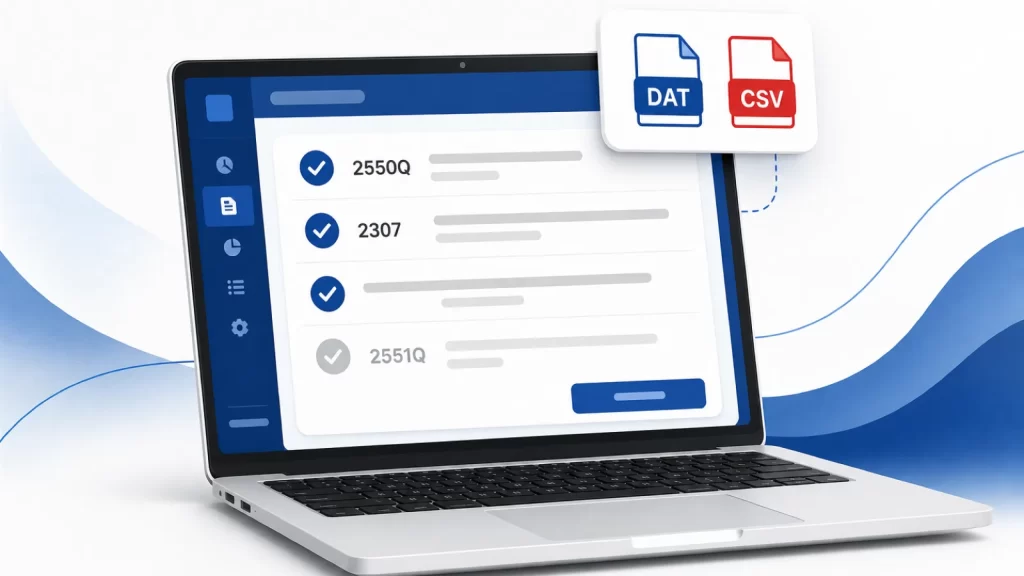
Quarter-end for many Philippine MSMEs means more than closing sales—it means BIR quarterly filing is due again. If you are VAT-registered, you are looking at Form 2550Q, sales and purchase summaries, and often DAT files. If you are non-VAT, 2551Q (percentage tax) may be on your list instead.
This Q2 2026 checklist helps you prepare before the deadline, align your books with your returns, and avoid the last-minute scramble that leads to penalties and amended filings.
Know your registration and forms for Q2 2026
Start with your BIR Certificate of Registration (Form 2303). It tells you which taxes you are registered for and how often you file.
- VAT-registered — typically 2550Q each quarter, plus SLS/SLP and DAT files when required
- Non-VAT (percentage tax) — 2551Q on your gross receipts or sales
- Withholding — expanded/expanded withholding returns if you withhold on payments
- Compensation — if you have employees, payroll-related forms on their own schedule
Tip: Put BIR due dates in your calendar at the start of the year. Oojeema’s homepage filing calendar is a useful reference—pair it with official BIR advisories for any date changes.
30 days before the deadline: close your books
- Record all Q2 transactions — sales invoices, purchase entries, expenses, and bank items through 30 June 2026.
- Reconcile bank accounts — every deposit and withdrawal should tie to a book entry or a documented reconciling item.
- Review VAT treatment — taxable, zero-rated, exempt, and out-of-scope lines classified correctly.
- Match invoice series — no gaps or duplicates in official receipt / invoice numbers you report.
Resource: Know your taxes: 2550Q on resources.oojeema.com.

Two weeks before: prepare BIR attachments
For VAT filers, generate your Summary List of Sales (SLS) and Summary List of Purchases (SLP) from the same books you will use for 2550Q. Export DAT files if your workflow requires them—do not maintain a separate spreadsheet that can drift from your accounting system.
- Compare total taxable sales on SLS vs. your sales journal
- Compare total taxable purchases on SLP vs. purchase records
- Reconcile output VAT and input VAT to your 2550Q draft
- Gather supporting invoices for large or unusual transactions
One week before: review with your accountant
Share draft returns, DAT files, and a short variance note if totals moved after reconciliation. Accountants can file faster when the package is complete—not when purchase invoices are still missing.
Filing week: submit and archive
- File through eFPS, eBIRForms, or your authorized agent bank channel as applicable
- Pay tax due via approved payment channels before the deadline
- Save PDF copies of filed returns, payment confirmations, DAT files, and working papers
- Update your internal “last filed period” tracker so Q3 prep starts clean
Common Q2 mistakes MSMEs make
- Mixing personal and business expenses — skews VAT and percentage tax bases
- Missing supplier invoices — understates input VAT and triggers 2550Q mismatches
- Wrong quarter selected — especially when filing right after a long weekend
- Forgetting alphalist or related schedules when your registration requires them
How Oojeema supports quarterly filing
Oojeema keeps books of accounts, 2550Q, 2551Q, and SLS/SLP DAT generation in one Philippine-compliant workflow—so quarterly filing is a review step, not a rebuild from scratch.
- BIR Forms & Reports
- Pricing
- 14-day free trial to walk through one quarter with your team
See also: Simplify BIR reports preparation.
*This article is for general information only and is not tax advice. Confirm deadlines and forms with the BIR or your licensed tax professional.*
After Q2: set up Q3 early
The week after filing, fix root causes—missing supplier TINs, wrong tax codes, delayed bank feeds—so Q3 is smoother. Schedule a mid-quarter VAT check in August for Q3 filers.
