
How to Use Oojeema With Your Restaurant POS
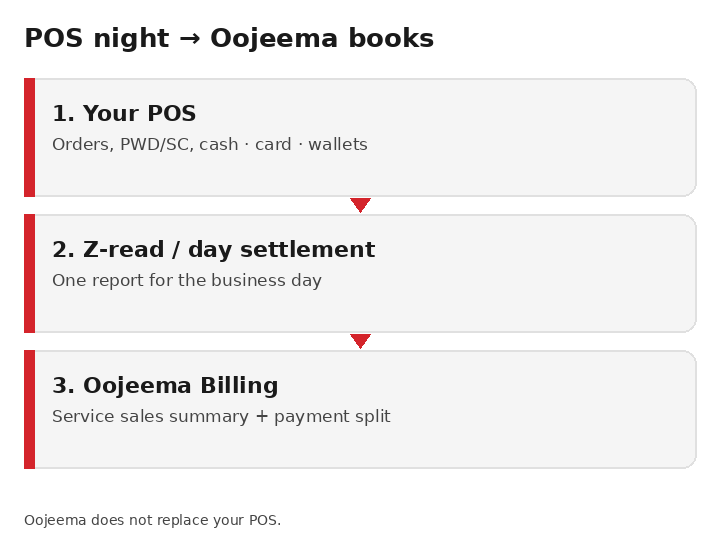
Running a restaurant already gives you enough numbers to watch. There are daily sales, cash in the drawer, card payments, GCash and Maya collections, supplier deliveries, discounts, expenses, and—if you track them—ingredients sitting in the kitchen or storeroom. Your POS handles what happens at the counter or table. Oojeema handles what happens to those numbers […]
How to register a Computerized Accounting System (CAS) with BIR
Plain map of BIR CAS registration under RMC 5-2021: Acknowledgement Certificate, documentary checklist, who does what, and where Oojeema fits—without filing for you.
Oojeema vs QNE Cloud Accounting for Philippine SMEs

Short answer: QNE Cloud Accounting and Oojeema both target Philippine businesses—but buyers should compare BIR form depth, DAT file workflow, pricing for MSMEs, and day-to-day usability for owners who file—not only accountants. This comparison focuses on local tax compliance and practical MSME fit, not every ERP feature either vendor may offer elsewhere in their product […]
Oojeema vs Xero: BIR Forms and DAT Files Compared
Xero is popular worldwide for cloud accounting and bank feeds. In the Philippines, the decisive question for many MSMEs is not “Can it invoice?” but “Can I get BIR-ready 2550Q, SLS/SLP, and DAT files without re-encoding everything?” Here is a practical comparison of Oojeema vs Xero for Philippine BIR compliance—written for owners and accountants evaluating […]
How to Generate SAWT DAT Files from Your Books (Philippines)
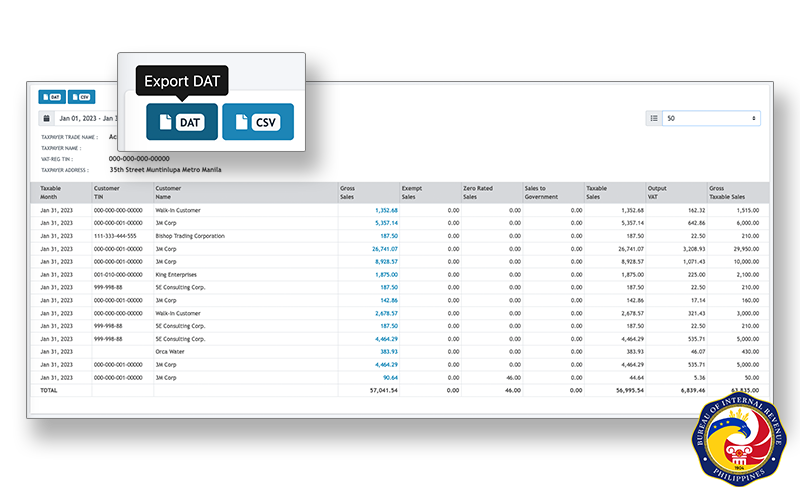
Short answer: SAWT (Summary Alphalist of Withholding Taxes) summarizes creditable withholding for a period. A SAWT DAT file is the BIR-prescribed electronic format used to submit that summary—built from the same 2307 and payment records in your books, not retyped from PDF certificates. If you already generate SLS/SLP DAT for VAT, SAWT is the withholding-tax […]
Oojeema vs QuickBooks for Philippine Tax Compliance
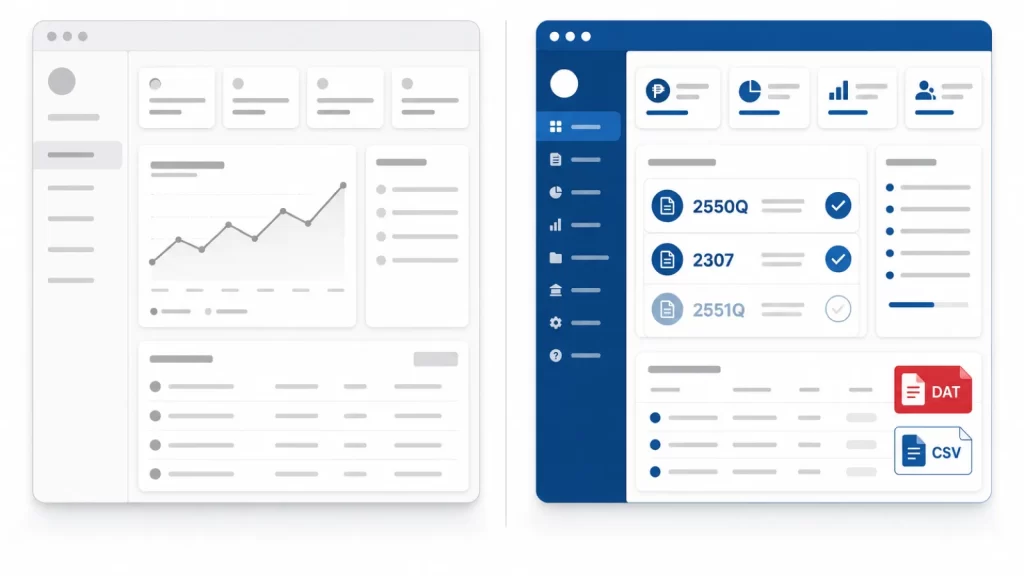
QuickBooks is a strong global accounting brand. Many Philippine MSMEs try it for invoicing and reports—then hit friction when BIR Form 2550Q, 2551Q, SLS/SLP, and DAT files need to match local rules. This comparison focuses on Philippine tax compliance, not every feature either product offers worldwide. For structured product facts, see Oojeema Facts. At a […]
How to Prepare BIR Form 2307 (Creditable Withholding Tax) in the Philippines
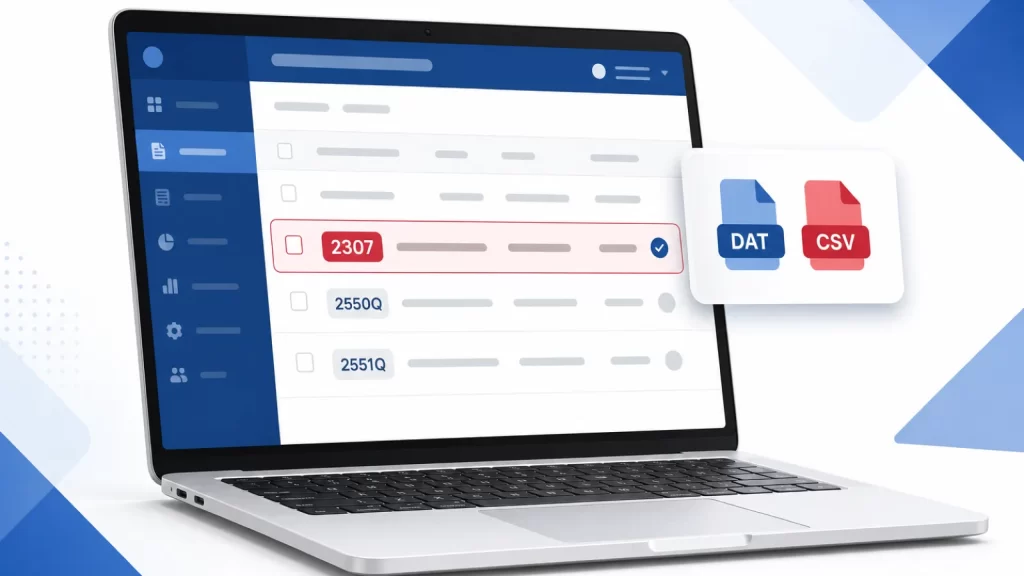
Short answer: BIR Form 2307 certifies creditable withholding tax you withheld from a supplier payment. Prepare it from posted payables with the correct ATC (Alphanumeric Tax Code), rate, and tax base—then print and issue to the payee so they can claim the credit. 2307 is one of the most common documents Philippine businesses handle monthly […]
Books of Accounts for BIR: What MSMEs Must Maintain
The BIR does not only look at your annual or quarterly tax returns—it expects proper books of accounts that show how you arrived at those numbers. For MSMEs, “books” means organized, chronological records of transactions, not a shoebox of receipts. Whether you use manual ledgers or cloud accounting, the goal is the same: complete, accurate, […]
VAT vs Percentage Tax: Which Should Your MSME Register For?
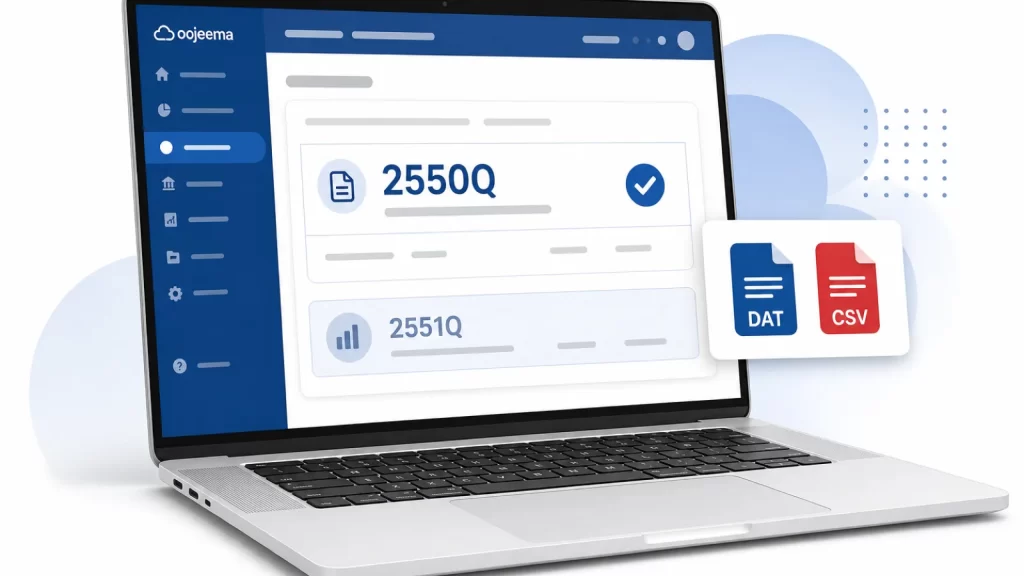
Short answer: Most growing Philippine MSMEs eventually register as VAT filers (Form 2550Q) or stay non-VAT on percentage tax (Form 2551Q). Your Form 2303 tax type—not your preference alone—determines which return you file each quarter. If you are setting up a business or reviewing registration, this guide explains VAT vs percentage tax in plain language: […]
2551Q for Non-VAT Businesses: What to Prepare Before You File

If your business is non-VAT registered, your quarterly percentage tax return is typically BIR Form 2551Q. Unlike VAT filers who track output and input VAT, percentage tax filers focus on gross receipts or sales subject to tax for the period. Filing is smoother when your books of accounts already show the right revenue base—before you […]
