
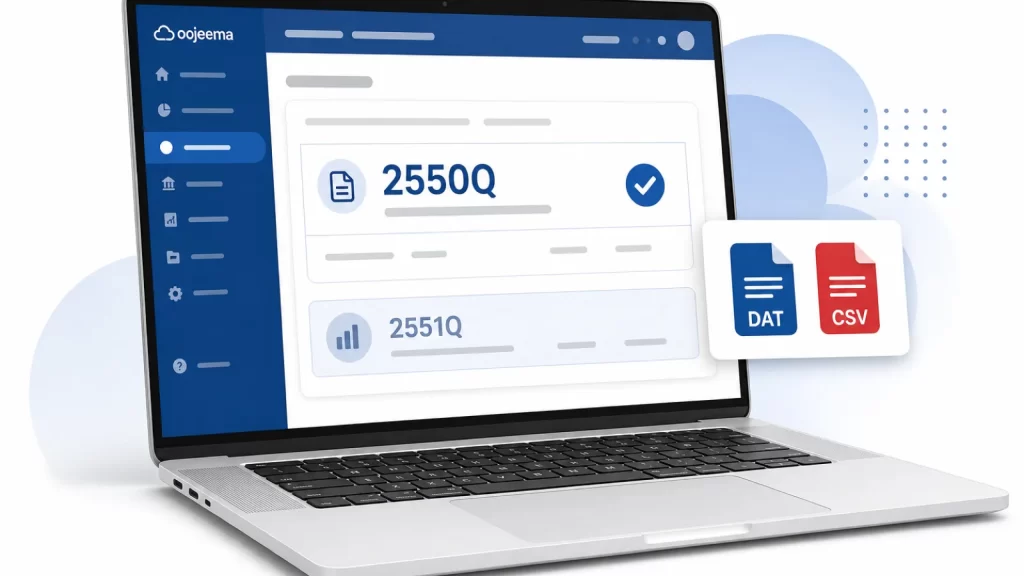
Short answer: Most growing Philippine MSMEs eventually register as VAT filers (Form 2550Q) or stay non-VAT on percentage tax (Form 2551Q). Your Form 2303 tax type—not your preference alone—determines which return you file each quarter.
If you are setting up a business or reviewing registration, this guide explains VAT vs percentage tax in plain language: what each means, typical filing workload, and how your books and software should support the path you are on.
What is VAT registration?
Value Added Tax (VAT) is an indirect tax on the sale of goods and services. VAT-registered businesses generally issue VAT invoices, track output VAT on sales and input VAT on purchases, and file BIR Form 2550Q (quarterly) or 2550M (monthly, if applicable).
VAT filers with sufficient taxable transactions also prepare SLS/SLP relief lists and often DAT files that must align with the return. Guide: 2550Q step-by-step.
What is percentage tax (non-VAT)?
Percentage tax applies to certain non-VAT registered businesses on gross receipts or sales at the rate prescribed for your registration. You typically file BIR Form 2551Q quarterly.
Non-VAT does not mean “no tax”—it means a different base and return. See 2551Q preparation guide.
Side-by-side comparison
- Primary return — VAT: 2550Q/2550M · Percentage tax: 2551Q
- Typical invoice — VAT: shows VAT breakdown · Non-VAT: no VAT line (per registration rules)
- Purchase tracking — VAT: input VAT credits matter · Non-VAT: focus on expense records and income tax support
- Relief lists / DAT — VAT: often SLS/SLP + DAT · Non-VAT: different package (no VAT relief lists)
- Bookkeeping depth — VAT: higher transaction classification · Non-VAT: still needs clean sales register

When businesses move from non-VAT to VAT
Revenue thresholds, business structure, and BIR rules can trigger or allow VAT registration. Switching is a planning event: you change invoice templates, train staff, and often upgrade software to handle 2550Q, SLS/SLP, and DAT exports.
Tip: Before switching mid-year, ask your CPA to model cash impact and filing calendar changes—do not flip registration and discover DAT requirements on deadline week.
Books and software for each path
Oojeema supports both 2550Q and 2551Q from the same ledger—your registration setting drives which return generates. That matters when you outgrow percentage tax and do not want to migrate to a new system under pressure.
Either way, maintain books of accounts the BIR expects: sales evidence, disbursements, bank reconciliation, and general ledger.
Related questions
Next steps
BIR Forms & Reports · Pricing · Free 14-day trial
*Not tax advice. Confirm registration and rates on your Form 2303 and with a licensed tax professional.*
Quick FAQ
Can I choose VAT if I am below threshold? — Rules depend on registration type and BIR issuances; voluntary VAT has conditions—ask your CPA.
Do freelancers use 2551Q? — Many non-VAT freelancers file percentage tax; confirm on Form 2303.
Which is simpler? — Percentage tax tracking is often lighter, but VAT registration may be required or beneficial as you scale.
